

Content
Sandstone is the easiest stone texture to get wrong. A wall that reads as sandstone at ten meters can look like printed wallpaper at one, and the difference is almost always grain: how the sand particles sit, how deep they are, and how they answer low afternoon light. Sandstone flexible stone is a mineral veneer roughly 3 mm thick that copies grain instead of drawing it, cast from a mold taken off real sandstone and bonded to a flexible backing that follows columns, arches and curved soffits.
Sandstone reads as sandstone because of grain sorting, not color. Get the grain wrong and the wall looks painted.
Sandstone flexible stone is a thin mineral veneer: a quartz-sand surface layer cast in a mold taken from natural sandstone, bonded to a flexible mesh backing, typically 2.5 to 3.5 mm in total thickness.
Definition: sandstone flexible stone is a mold-cast mineral veneer in which the grain, tone and depth come from graded quartz sand and stone powder rather than from a printed film or an added pigment coat.
That composition explains the behavior on a wall. Sandstone tone is not painted on; it comes from the sand itself, which is why two sheets can sit side by side without a visible pattern repeat, and why the surface does not depend on a decorative layer that can wear away.
The absence of a print layer is the practical difference between a sandstone surface that survives a decade of sun and one that looks tired after two summers. There is no ink to fade and no film to lift, so what changes over the years is the grain itself.
The grain is formed in the mold, not on the surface. A mold face carries the negative of a real sandstone slab, and graded sand with binder is sprayed into that negative in three dimensions, so the depth on the finished sheet is a copy of quarry stone rather than a pattern applied over a flat base.
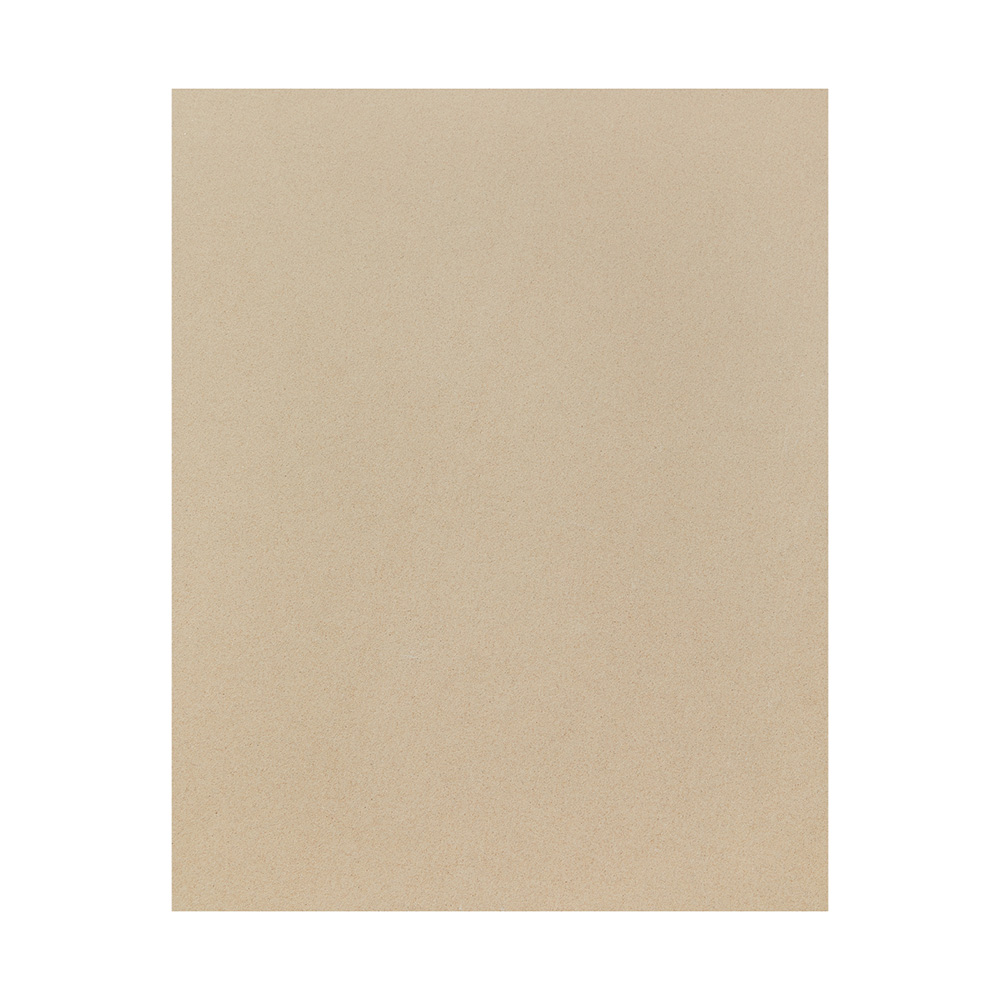
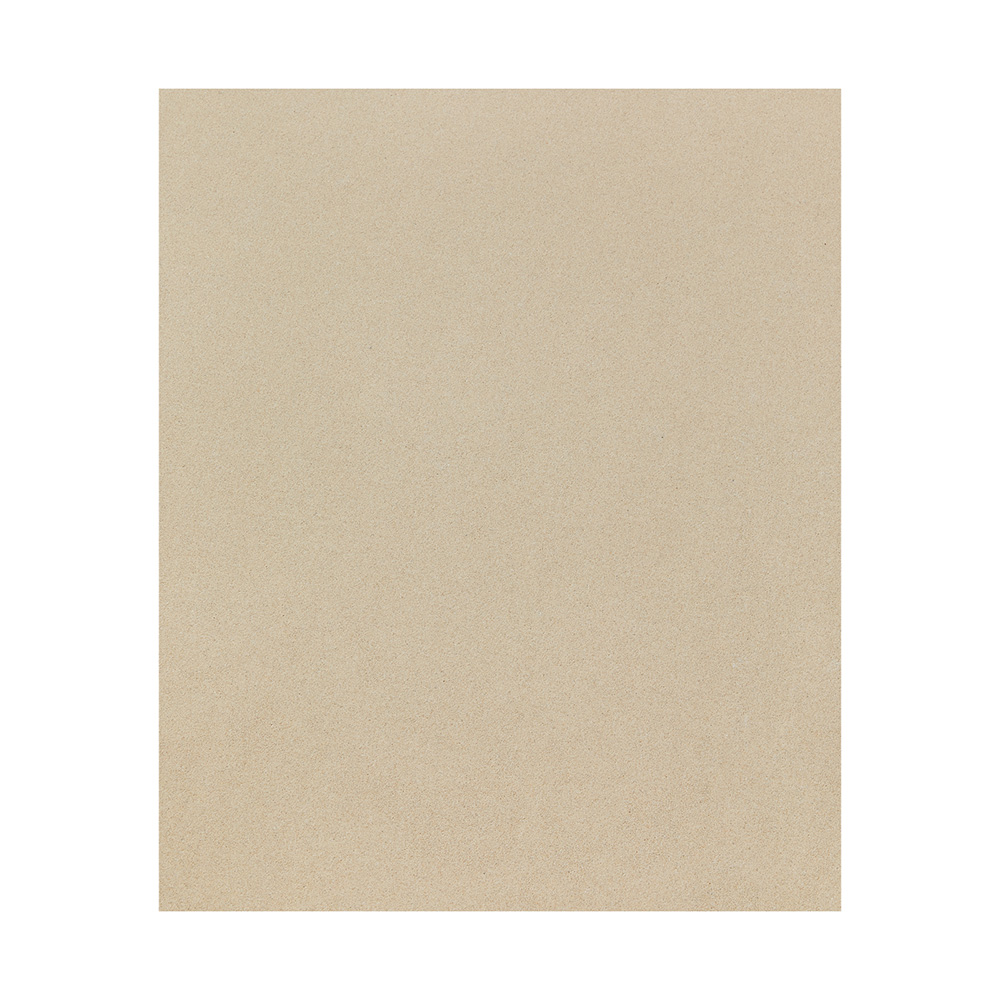
Small particles with shallow shadow depth. It reads soft and even across long walls and interior planes, and it is the safer choice where a large uninterrupted surface would expose any repetition.
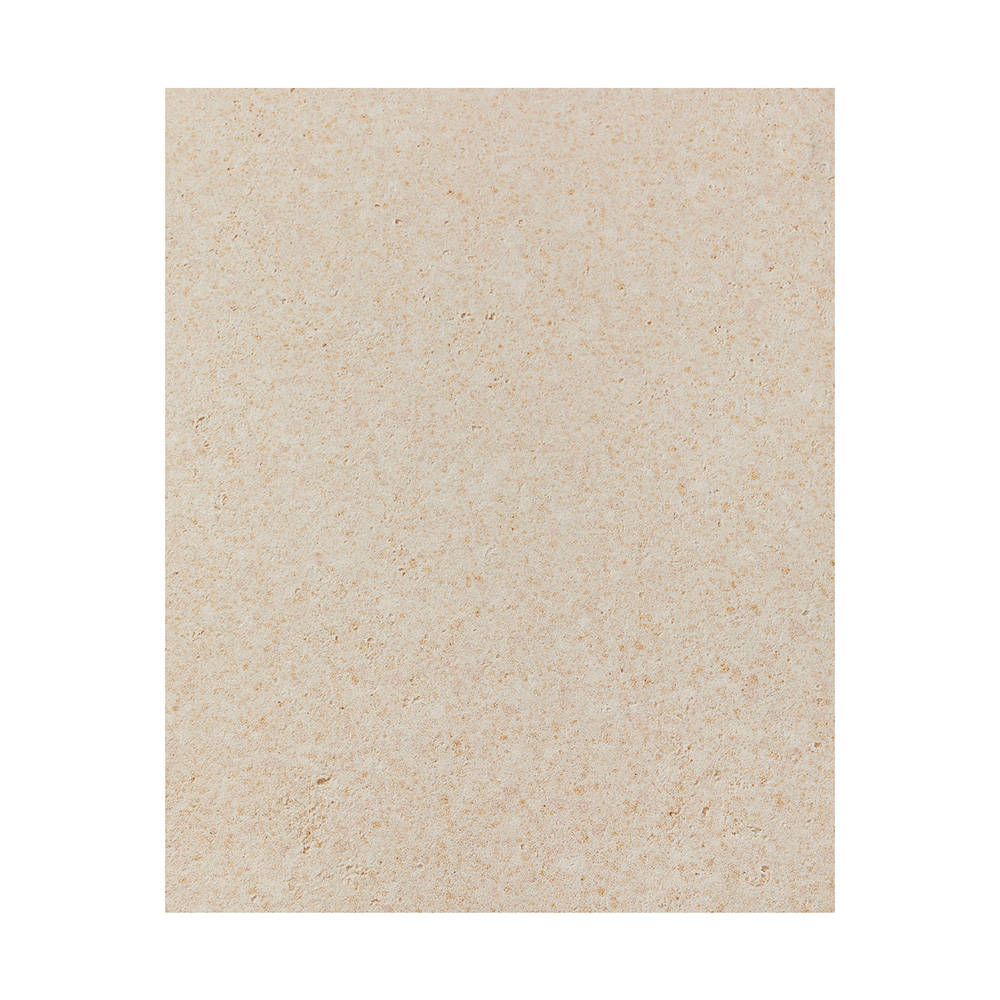
Deeper shadow between particles. It keeps its definition at twenty meters and suits facades, columns and boundary walls, though the open grain collects fine dust more readily than a closed surface.
The quickest way to judge a sample is raking light. Take it outside in late afternoon sun, or slide a phone torch across it at a shallow angle. A cast surface shows micro-shadows that shift as you move; a printed surface stays flat and the pattern refuses to change.
Raking light is the honest test. If the grain disappears when the light comes in low, the surface was printed, not cast.
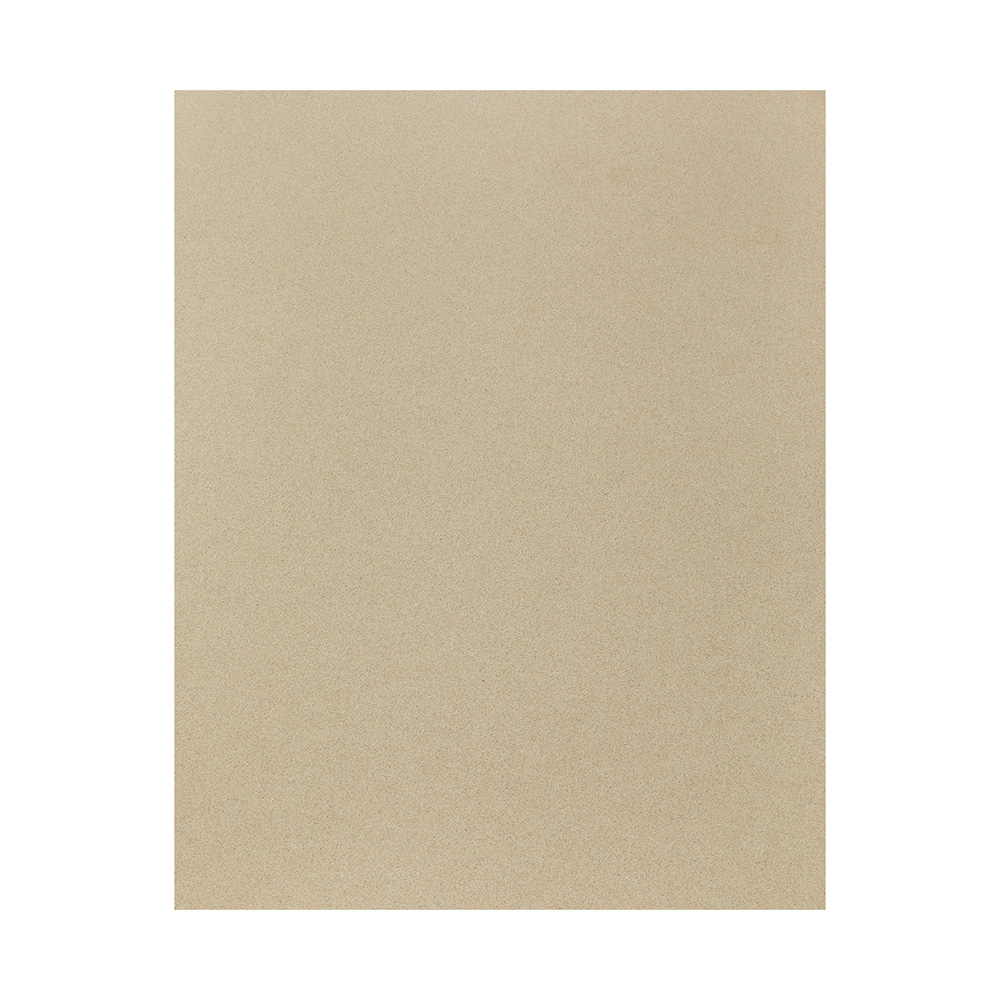 Sandstone Flexible Stone Veneer for School Interior and Exterior WallsA thin natural stone powder veneer for school interior and exterior walls, useful here for its mineral surface and UV resistance.View Product →
The surface is mineral, so ultraviolet exposure changes it far less than it changes organic coatings or dyed films. The real risks on a sandstone wall are moisture cycling, salt deposits and abrasion, not fading.
Qualitative planning view for early facade decisions, not a test ranking. Confirm values against the supplier datasheet for the specific grade.
A mineral surface does not fade the way a dyed one does. When a sandstone wall changes, the cause is almost always dirt, salt or abrasion, not pigment loss.
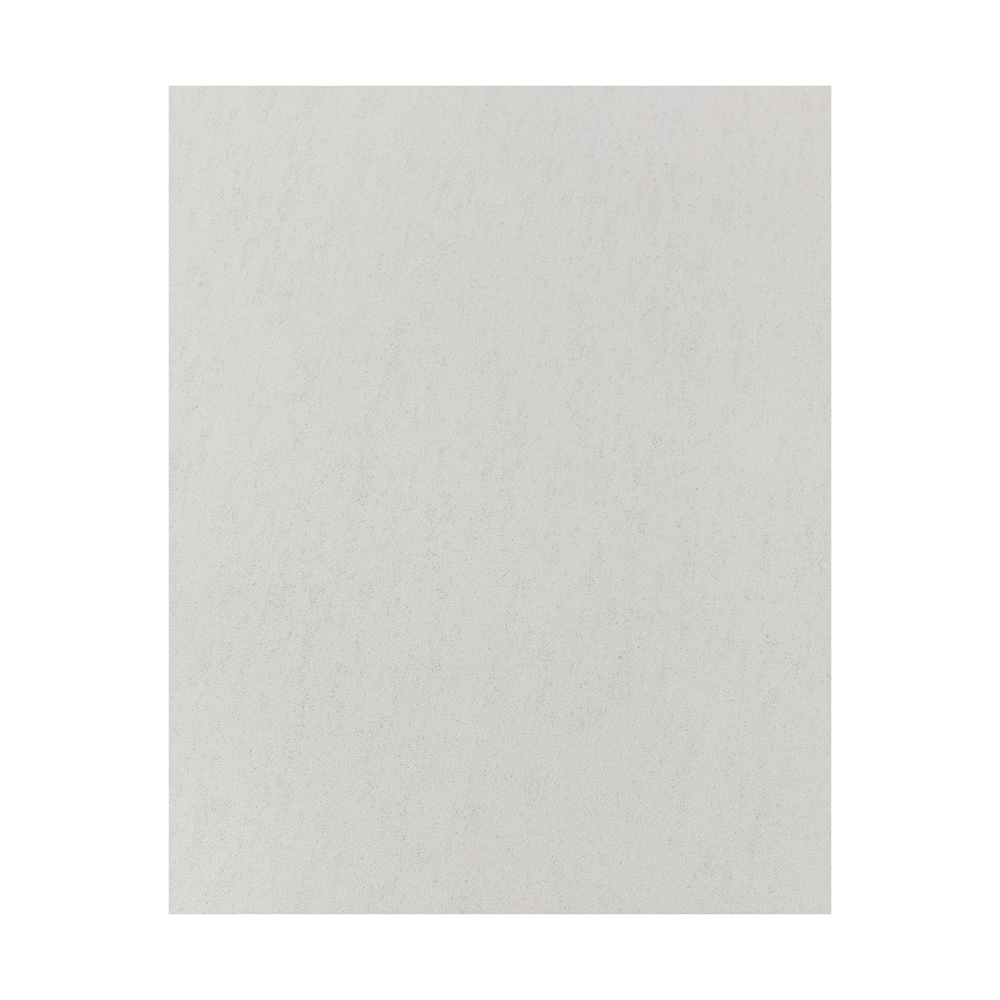 Sandstone Flexible Stone Veneer with UV Protection for Middle EastA flexible natural stone powder veneer with UV protection, suited to curved facade details, entrance portals, columns and public interiors under intense solar radiation.View Product →
Sandstone works best where a wall has to look like stone at close range and still follow a curve: entrance portals, columns, courtyard walls, lift surrounds and public interiors.
A matte sandstone face does not glare under floodlighting or hard midday sun, so it reads calmly on schools, clinics and renovated town centers at almost any hour.
Sandstone is a background texture, not a feature pattern. Fine-grain sheets give lobbies and restaurants a surface that flatters warm lighting without competing with furniture.
Columns, arch soffits, ramp walls and lift surrounds are where a bendable sheet does what a rigid slab cannot, carrying the stone grain through the curve.
On larger commercial building projects the value shows up as consistency: one texture family carried from the entrance canopy to the rear service wall, with no change of material character in between.
Choose sandstone for the plane, not for the pattern. It is a quiet texture that lets architecture, lighting and planting carry the drama.
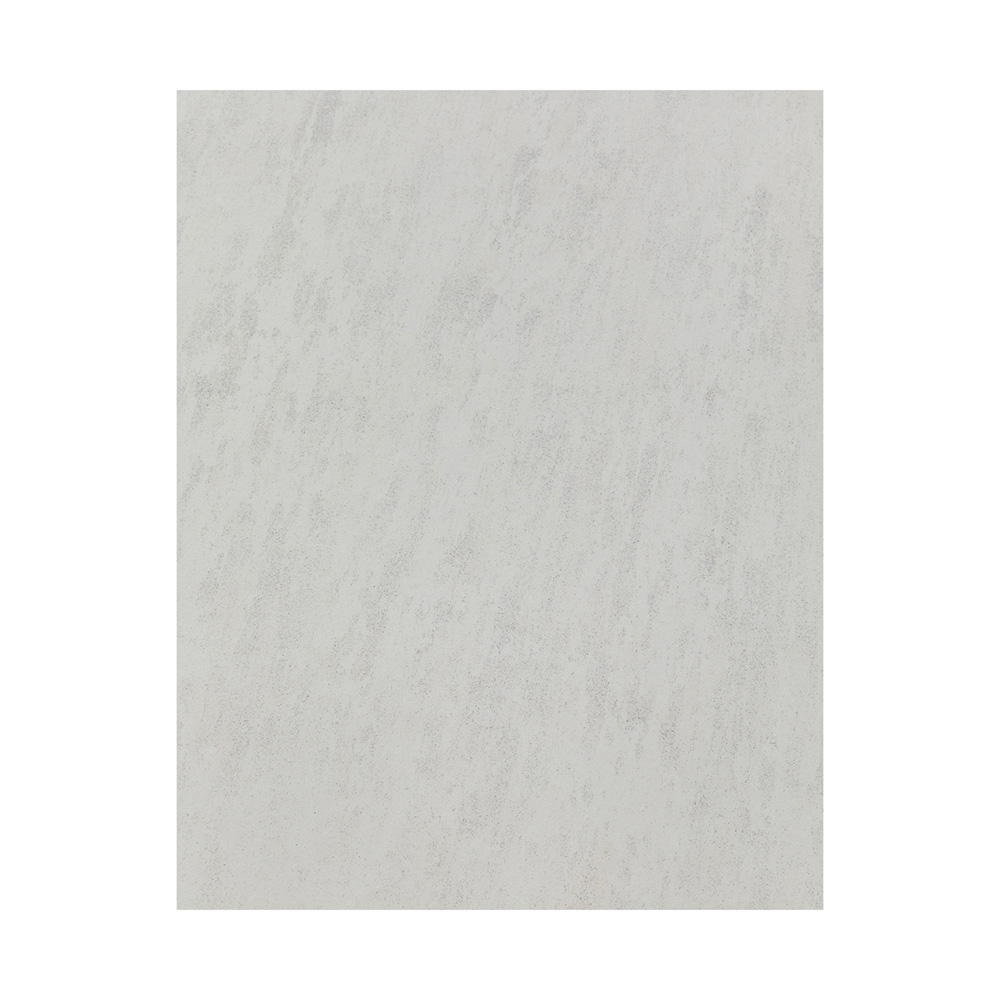 Eco-Friendly Sandstone Flexible Stone Wall Panel for VillaA lightweight natural stone powder panel for villa and commercial walls, where consistent sandstone texture and verifiable thickness, weight and sheet size matter.View Product →
Most disputes around sandstone flexible stone come back to three numbers and one reference: thickness, surface weight, sheet size, and the production batch the sample came from.
| Property | Typical range | Why it matters |
| Total thickness | 2.5 to 3.5 mm | Sets the achievable bend radius and how the grain reads under raking light |
| Surface weight | 3 to 5 kg/m2 | Keeps substrate and fixing design simple, including soffits and high-level work |
| Sheet size | 600 to 900 mm wide | Wider sheets mean fewer joints on long walls; narrow sheets suit columns and trims |
| Surface layer | Graded quartz sand, no print | Explains UV stability, scratch behavior and how the wall ages |
| Water behavior | Moisture-proof grades for wet climates | Wetting shifts tone temporarily; drying returns the original shade |
| Fire behavior | Mineral composition, no organic face film | Reduces fuel load, though the local class still needs the supplier test report |
A datasheet range is not a promise. Ask which batch the sample came from, and check that the same batch reference appears on the delivery documents.
Natural quartz sand means sandstone tones sit close together but are never identical from batch to batch. On any wall larger than a few hundred square meters, plan the full area from a single production batch.
On exposed walls, rain keeps the grain clean and the surface matte. Indoors, the open grain in touch zones such as corridors, lift lobbies and stairwells collects fine dust, and the practical answer is water with a soft brush rather than abrasive pads, which flatten the peaks of the grain. More detail on why the sheet behaves this way sits in the construction advantages of the system.
Sandstone is a quiet material. It ages by losing sharpness, not color, so design the touch zones before you design the pattern.
Answers below assume a mineral sand surface on a flexible carrier, the construction used across the sandstone range.
Yes, when the grade matches the climate. The face is mineral and the backing is flexible, so UV and ordinary rain are not the concern. In coastal or freeze-thaw regions, ask for salt and freeze-thaw test data and confirm the fixing pattern for the actual substrate.
No, there is no pigment layer to bleach. Tone comes from natural sand minerals, so long sun exposure produces a slow dulling of the surface rather than a color shift, and that dulling is usually dust that washes off.
Yes, and it is often the point. Keep both areas on one batch so a lobby wall and the facade beside it stay in the same tone family. Under interior light the grain reads finer, so a coarse sheet chosen for a facade can look heavier than expected indoors.
Depth. A cast surface carries real grain with micro-shadows that move as the light changes, and the mineral face resists scuffing because the texture is the material rather than an image sitting on top of it. Printed films look convincing in photographs and flat in person.
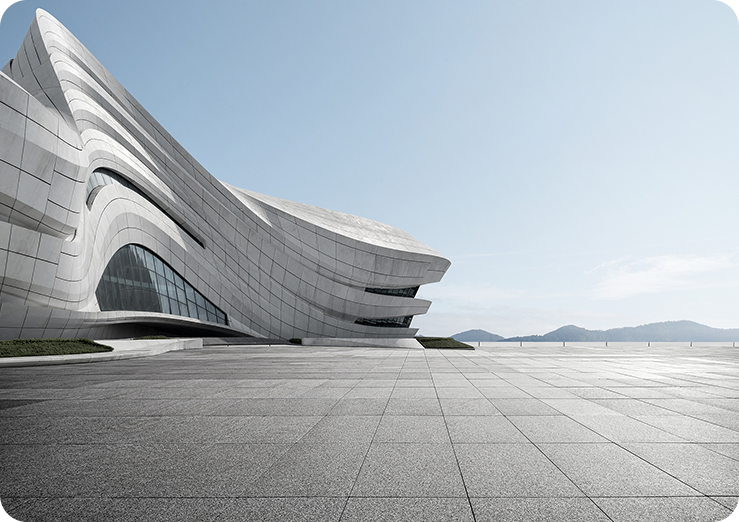

Justone is Thin Flexible Stone Veneer Sheet Supplier in China.The company takes innovation-driven development as its core, regards promoting the progress of the industry as its responsibility, deeply engages in the chemical composite building materials track, and demonstrates its professional expertise in this field.



 English
 Français
 Español
 Português
 عربى
عربى