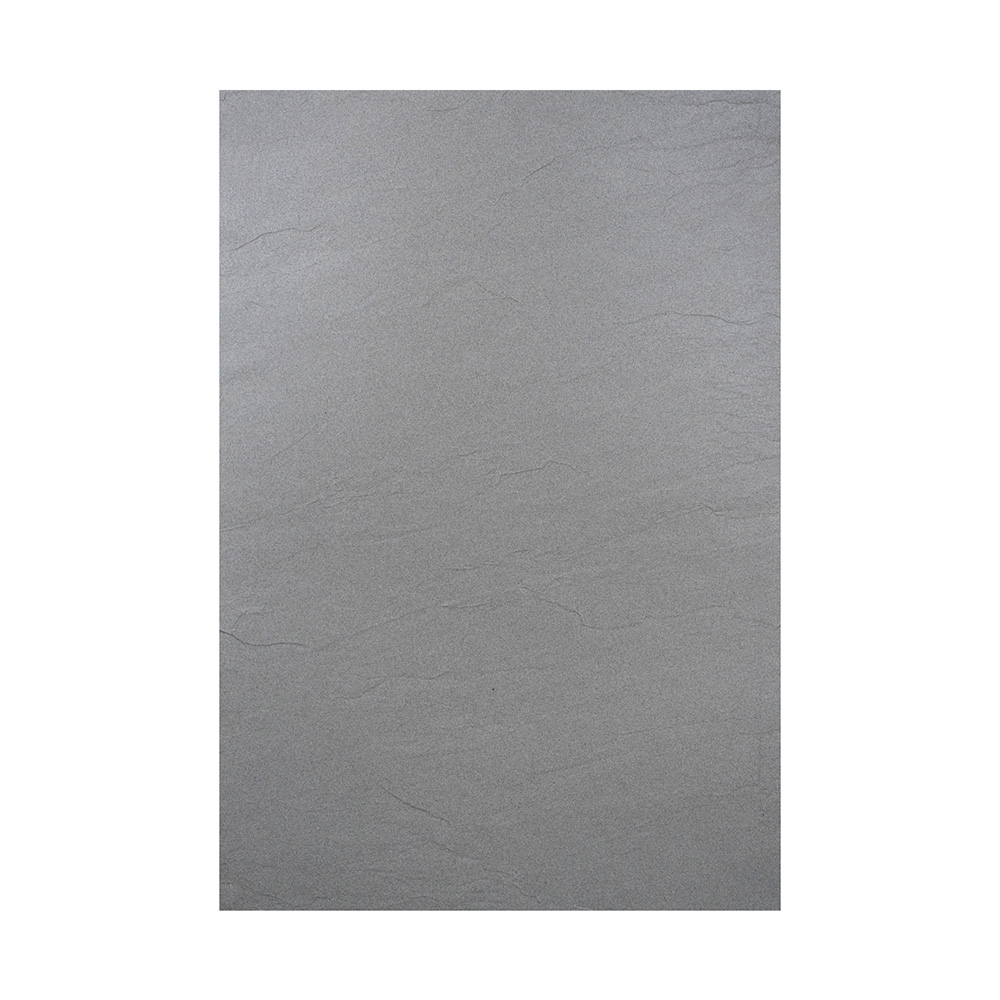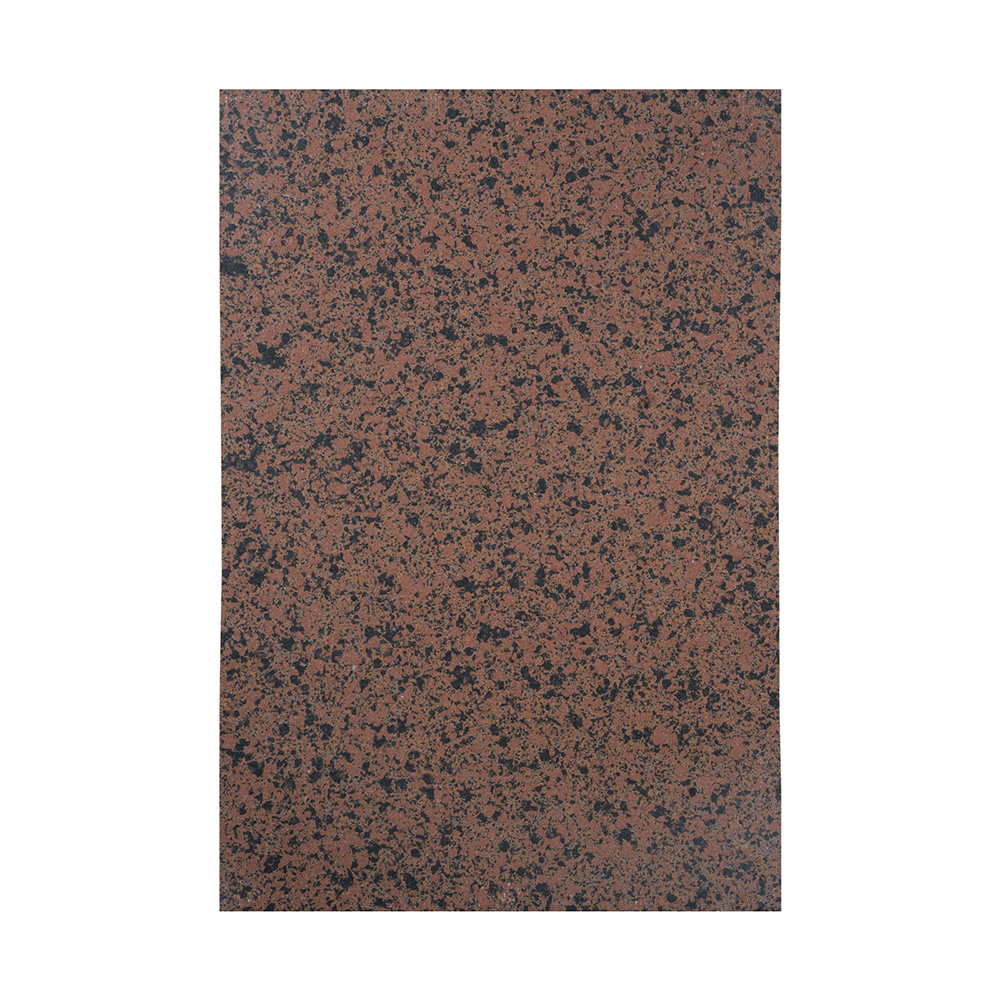


Content
Linear flexible stone is a thin mineral veneer whose face is cut by narrow parallel grooves, and the detail that decides whether a finished wall reads as quarried stone or as a printed panel is not colour. It is groove pitch and groove depth consistency along the joint line.
Most enquiries about this product describe a project rather than a specification. A hotel lobby feature wall that has to wrap around a structural column without an obvious seam. A villa elevation in a coastal town where salt spray destroys painted finishes within a few seasons. The Louta old-town renovation, a 16,000 sqm renewal where the design team wanted a fine linear stone texture but nobody wanted to add tens of kilograms of cladding to every square metre of an existing structure. In each case the buyer arrives with two words: linear, and light.
The difficulty is that "linear" is used loosely across the market. It can describe a 3 mm shadow groove repeating every 20 mm, a wide decorative channel cut every 100 mm, or a flat stone face with a linear grain printed across it. Those three products share a search term and almost nothing else: different moulds, different weights, different outdoor behaviour, and very different results once they are spread across a large elevation.
Definition: linear flexible stone is a bendable stone veneer, usually 2.5 mm to 3.3 mm thick, moulded from quartz sand and mineral powder against a tool that already carries the groove profile. Colour comes from the sand blend rather than added pigment, and the finished skin weighs roughly 3 kg to 4 kg per square metre.
Linear flexible stone is a moulded mineral skin rather than a slice of quarried rock, and that single fact explains almost everything about how the product behaves once it is spread across a wall.
Most flexible stone veneers are peeled from a block and their texture is formed afterwards. The linear product runs the other way round. Quartz sand, stone powder and a binder are sprayed into a three-dimensional mould that already carries the groove geometry, so the texture is created in a single pass and repeats panel after panel. No colour paste is added to the mix, so tone is carried by the sand blend itself. That is why two production batches of the same reference can look slightly different in direct sunlight, and why a sample approved under indoor lighting can shift noticeably on a south elevation.
In practical terms, this production route delivers three useful things: groove alignment that holds across very long runs, a profile that survives bending without flattening, and a mineral face instead of a printed film. The trade-off is that the mould defines the final texture, so changing groove spacing means changing tooling, lead time and minimum order quantity. Buyers who treat the groove as a cosmetic detail usually discover this late.
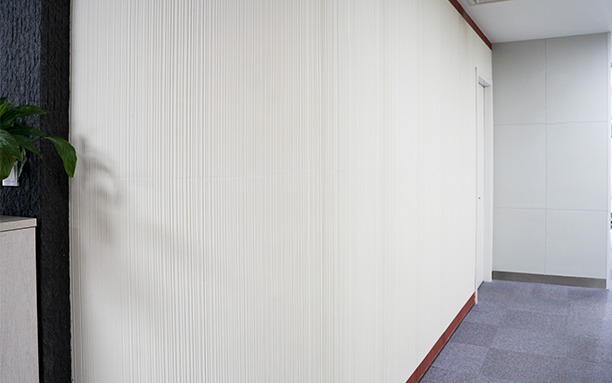 Linear Flexible Stone Veneer for Interior and Exterior WallsMineral-faced flexible veneer with directional linear grooves for feature walls and facades, retaining natural stone’s weather, waterproof and fire-resistant qualities.View Product →
Linear grooving is a directional texture: it pulls the eye along a wall, softens panel joints and changes how light lands on the surface between morning and late afternoon.
A fine linear face with grooves of roughly 3 mm to 6 mm reads almost like smooth stone with a subtle ribbing, which is why it suits very large elevations where a heavy texture would look restless. Broad decorative channels of 20 mm and above behave as a graphic element instead, and they belong on smaller surfaces such as entrance surrounds, reception walls and feature columns. Flat stone faces with a printed linear grain sit at the bottom of the range: they are inexpensive and they look flat the moment light strikes them at an angle.
Two panels can photograph identically and still be different products. Ask for the groove pitch and depth in millimetres, never for a picture.
Five numbers decide whether a linear flexible stone order meets expectation: skin thickness, groove depth, groove pitch, weight per square metre, and the weathering grade confirmed with the factory. Everything else, including colour, is negotiable after those five.
Thickness is quoted as a band rather than a single figure, typically 2.5 mm to 3.3 mm, because moulding varies slightly across a sheet. Groove depth is the figure buyers forget to write down, and it is the one that moves the price. Pitch, measured from groove centre to groove centre, decides whether a wall looks finely ribbed or heavily banded when viewed from 30 metres away.
| Criterion | Linear flexible stone | Rigid stone cladding |
| Face thickness | 2.5-3.3 mm | 20-30 mm |
| Weight per square metre | 3-4 kg | 50-70 kg |
| Behaviour on curves | Follows columns and radii | Cut and mitred, cannot bend |
| Joint line | Tight, near-invisible seams | Mortar or expressed joints |
| Dead load | Negligible | Needs structural allowance |
| Transit breakage | Low, packs flat | Edge chipping and cracking |
| Tone variation between batches | Slight, driven by sand blend | Slight, driven by quarry seam |
| Local damage | Patched from the same batch | Matching is difficult |
Weight is usually the reason a project changes material at all. A 20 mm granite cladding carries roughly 60 kg per square metre before any structural allowance is added, while a linear flexible stone skin carries a small fraction of that figure for the same visible area.
Three millimetres of moulded mineral skin replaces twenty millimetres of quarried granite on the same square metre of wall, which is frequently the reason the texture is considered at all.
The wider set of construction advantages of flexible stone covers transport volume, handling and structural allowance in more detail than a single specification table can.
Linear flexible stone performs best where a large, calm surface needs genuine stone depth without genuine stone weight: long facades, curved columns, entrance canopies, boundary walls and interior feature walls.
The applications below are the ones where the mismatch between rigid stone and real geometry is most obvious, and where the linear profile earns its place rather than simply decorating a flat panel.
Moisture, ultraviolet and fire performance are grade decisions rather than automatic properties of a texture. The same linear pattern can be quoted in an interior grade and an exterior grade, so confirm which grade a quotation actually covers before comparing prices.
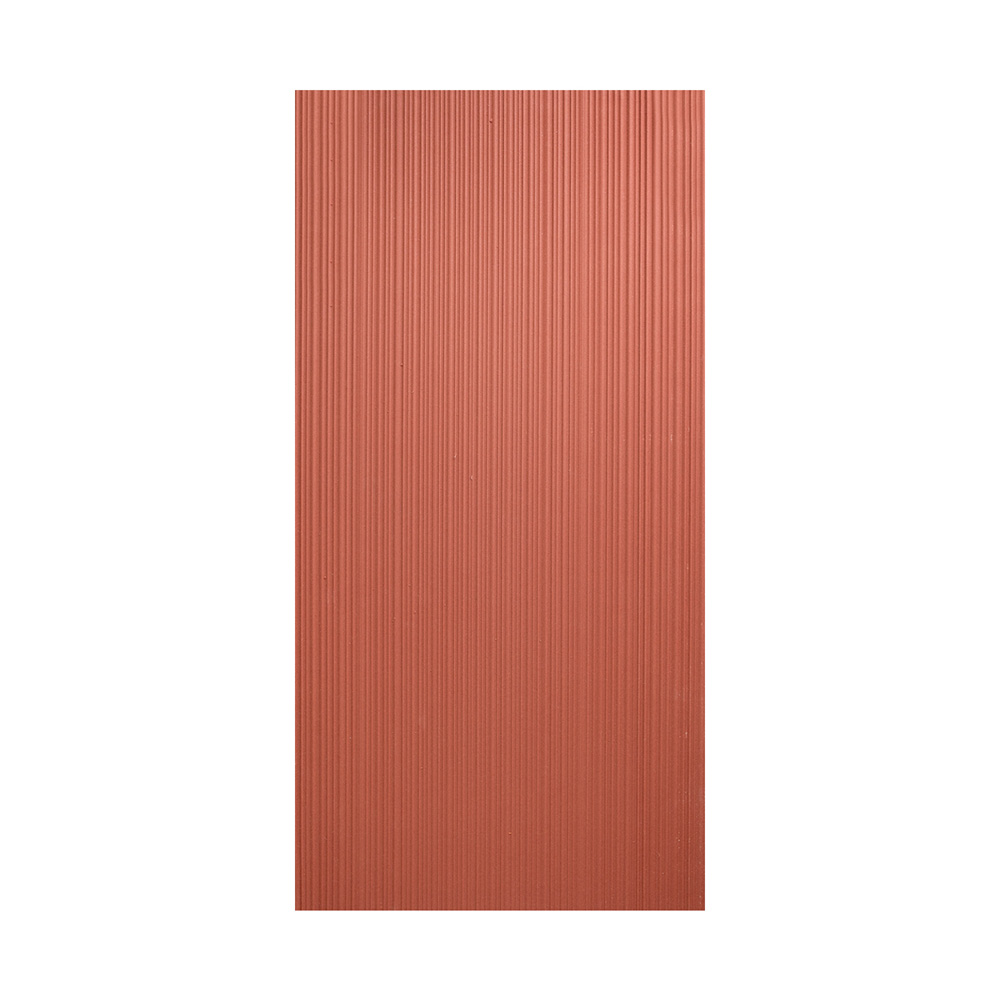 Villa Decorative Waterproof Linear Flexible Stone VeneerWaterproof, fire-resistant linear veneer for villas and facades; confirm interior or exterior grade, sample, thickness band and weathering data before ordering.View Product →
Five checks separate a linear flexible stone order that arrives as expected from one that generates months of argument: sample, thickness band, weathering data, batch reservation and packing.
The most common complaint about linear flexible stone is not colour and not price. It is a groove that measured 5 mm in a photograph and arrived 2 mm deep from a different mould, on a wall long enough to make the difference obvious to everyone standing at ground level.
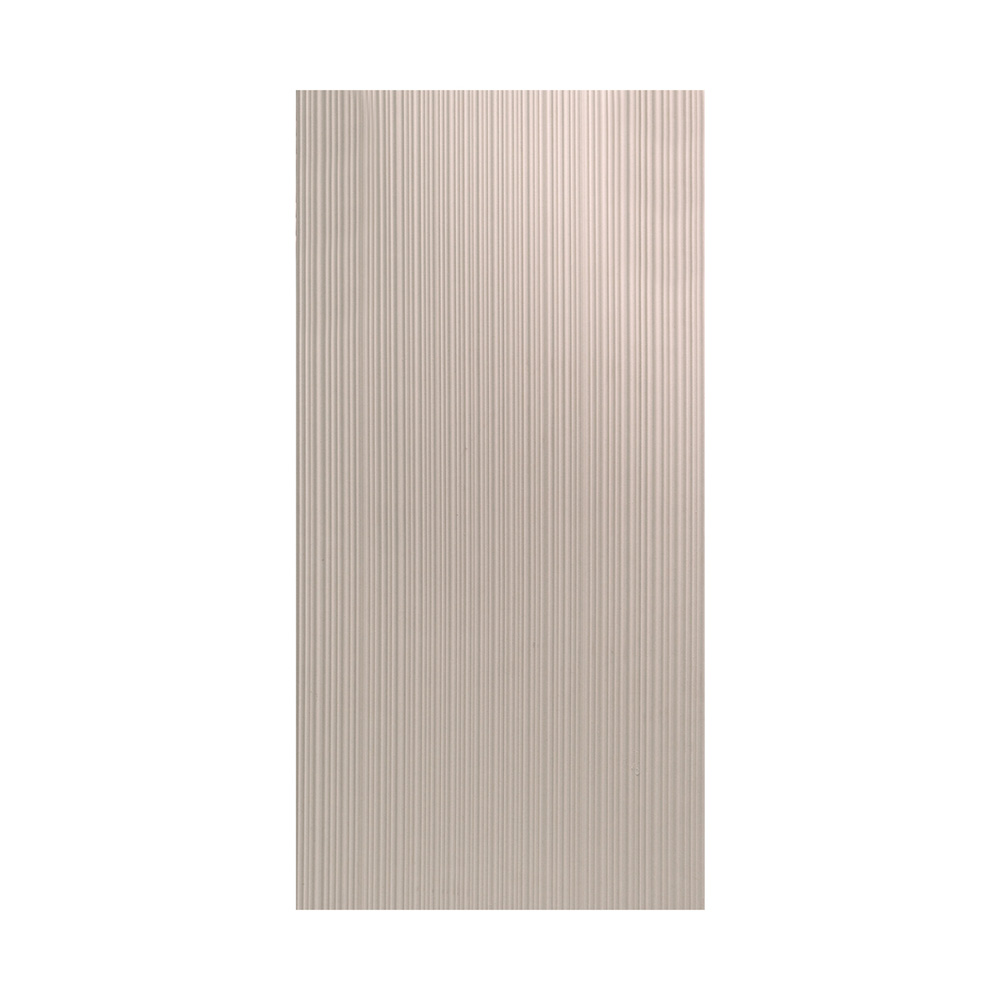 Indoor Decoration Linear Flexible Stone Exterior Wall MaterialNatural stone powder veneer for interior and exterior walls, with fine grooves suited to long facades, columns and renovations while reducing wall load.View Product →
Linear flexible stone is used for exterior and interior wall surfaces, including long facades, columns, entrance surrounds, hotel and retail interiors, boundary walls and renovation work where an existing wall stays in place. The fine groove profile suits large, quiet surfaces better than small decorative panels.
Most linear flexible stone veneers are between 2.5 mm and 3.3 mm thick and weigh roughly 3 kg to 4 kg per square metre, against 50 kg to 70 kg for the same area of 20 mm solid granite cladding.
Yes, provided the specified grade is formulated for exterior exposure. For coastal and high-sunlight regions, ask specifically about ultraviolet and salt spray performance, and confirm that the quotation names an exterior grade rather than an interior one.
The material price per square metre is often close to mid-range granite cladding once mould tooling is amortised. The larger savings appear in transport volume, reduced structural allowance and the ability to cover curved geometry without additional cutting and waste.
A practical rule for specifiers: fix the groove pitch and depth first, then compare suppliers on thickness band, exterior grade and batch consistency. Everything else is easier to change later than a mould.

Justone is Thin Flexible Stone Veneer Sheet Supplier in China.The company takes innovation-driven development as its core, regards promoting the progress of the industry as its responsibility, deeply engages in the chemical composite building materials track, and demonstrates its professional expertise in this field.



 English
 Français
 Español
 Português
 عربى
عربى