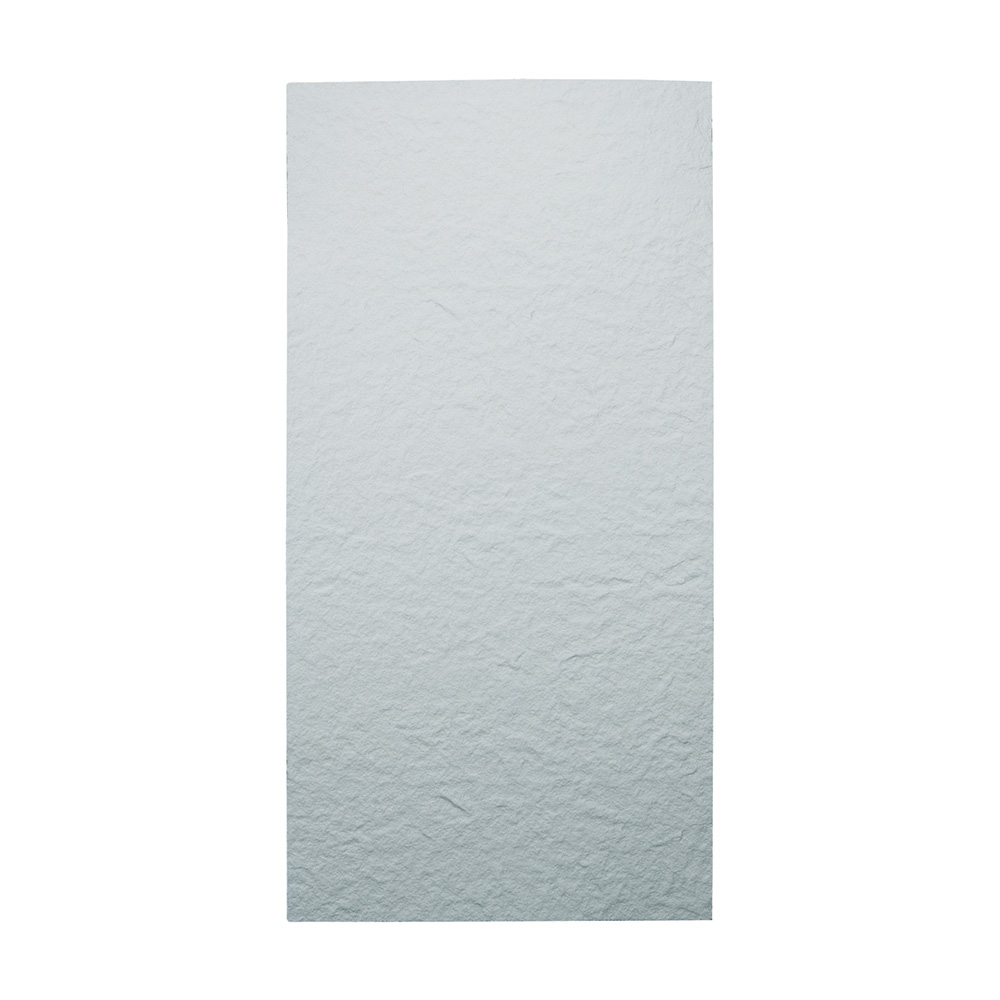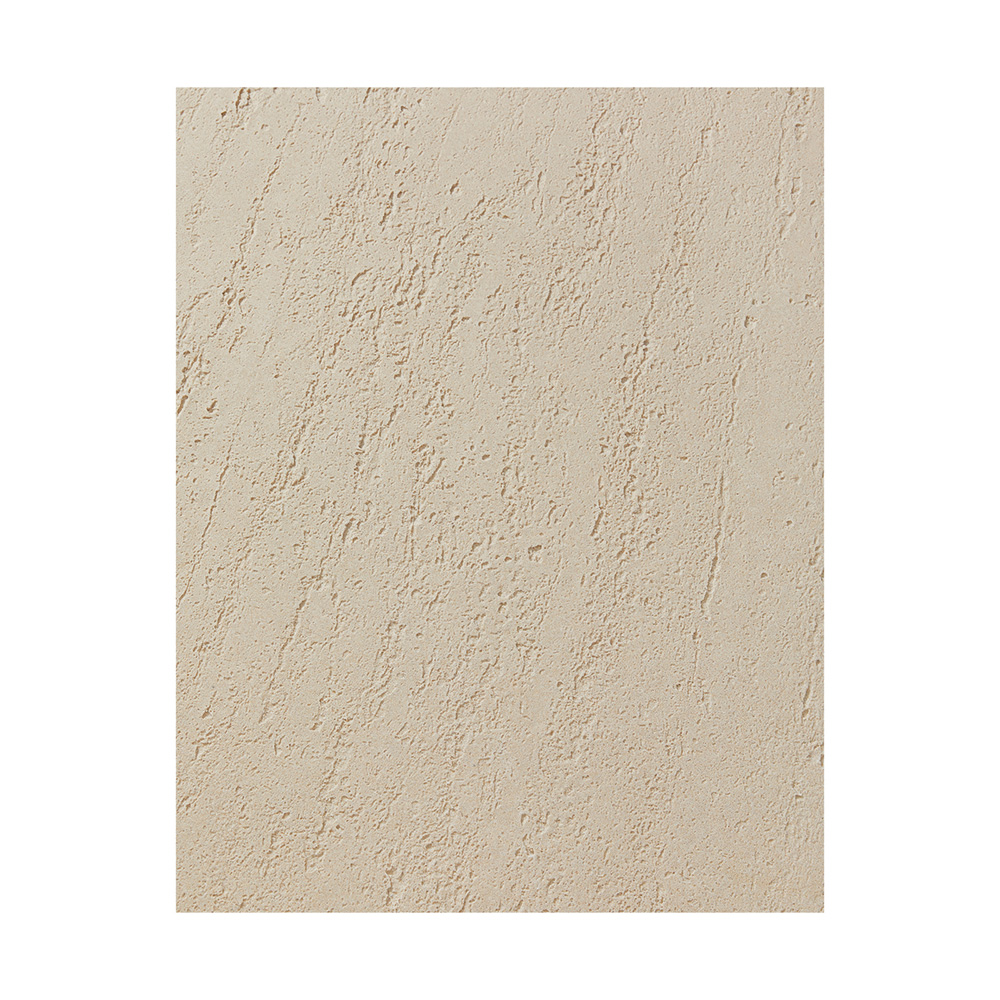


Content
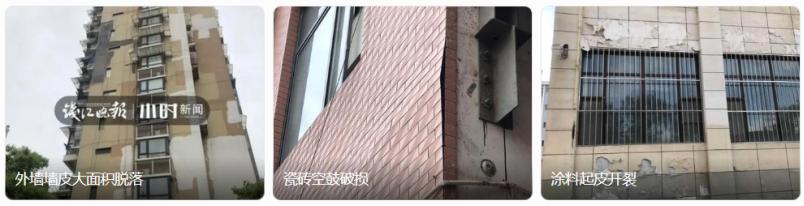
Figure 1: Three failures of conventional finishes - large-area delamination, hollow tile, and blistering coatings.
Exterior wall insulation is a critical part of building energy efficiency. The current industry standard, Technical Standard for External Thermal Insulation on Walls (JGJ 144-2019), is explicit: under normal use and normal maintenance, an external thermal insulation system must have a service life of no less than 25 years. That is the minimum the code requires.
In reality, many buildings fall far short of it.
Usually the insulation material itself is not the problem. The finish layer on the outside gives out first.
An external insulation system (ETICS) sits on the outermost layer of the building, permanently exposed to wind, sun and rain. Its working environment is harsh: temperature swings, humidity, wind pressure and ultraviolet radiation, every single day.
Most insulation materials are lightweight and porous, and not especially strong in themselves. They rely on the finish layer on the outside to protect them.
If that protection fails, the insulation layer is directly exposed to risk.
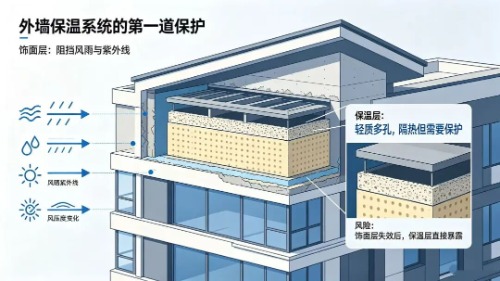
Figure 2: The first line of protection on an insulation system is the finish layer - the barrier against wind-driven rain and UV. Once it fails, the insulation is exposed.
There are three structural reasons why conventional finishes - ceramic tile, stone and ordinary coatings - damage the insulation system.
Insulation boards, rendering mortar and rigid finishes have very different coefficients of thermal expansion. Seasonal temperature cycling and building settlement both generate shear stress.
That stress acts on the finish layer first. Rigid materials such as tile and stone cannot deform, so the stress has nowhere to go - and the finish layer cracks first.
Once a crack appears, rainwater gets in. When insulation absorbs water, its thermal performance drops sharply. In winter the water freezes and expands, and the resulting frost-heave stress damages the rendering layer and the glass fibre mesh.
Cracking, then water ingress, then insulation failure, then hollowing and detachment: a vicious cycle.
The crack in the finish layer is where the whole chain reaction begins.
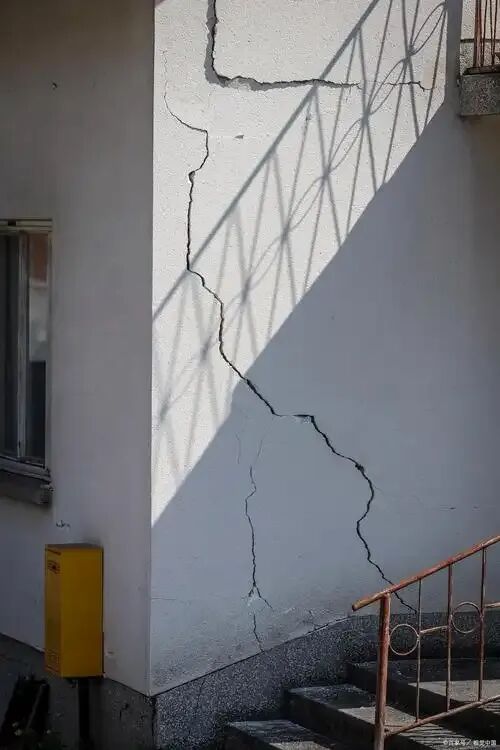
Figure 3: A crack in the finish layer - the starting point of the chain reaction.
Tile and stone are heavy, and they cannot deform.
Stresses generated by building settlement, vibration and thermal expansion cannot be absorbed by the finish, so they pass straight through to the insulated rendering layer - breaking the glass fibre mesh and causing delamination and hollowing of the insulation board.
At the same time, the exterior walls of high-rise buildings carry long-term vertical tensile load. A rigid finish transfers that load directly to the insulation layer, causing delamination of the boards and failure of the anchors.
Once the insulation layer is pulled loose and hollow, detachment is only a matter of time.
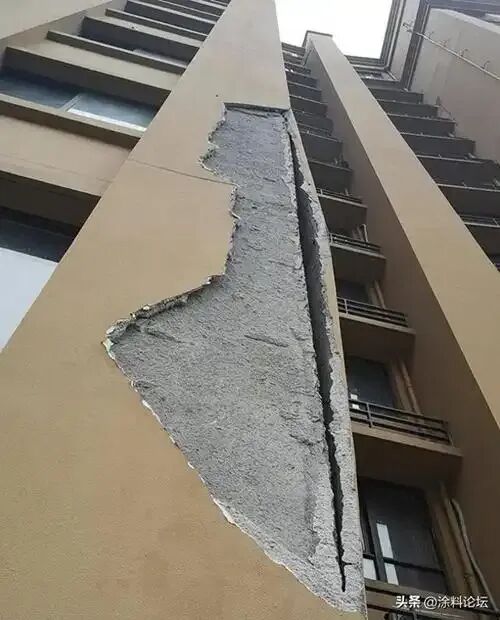
Figure 4: A high-rise corner losing its finish, exposing the grey base coat and the glass fibre mesh beneath.
Ordinary cement-based bonding materials release soluble salts, which attack the insulation layer and the glass fibre mesh and accelerate ageing and breakdown of the whole system.
Conventional coatings begin to chalk and fade within three to five years. Once the surface is breached, UV and rainwater attack the insulation directly - and the 25-year design life of the system is often cut in half.
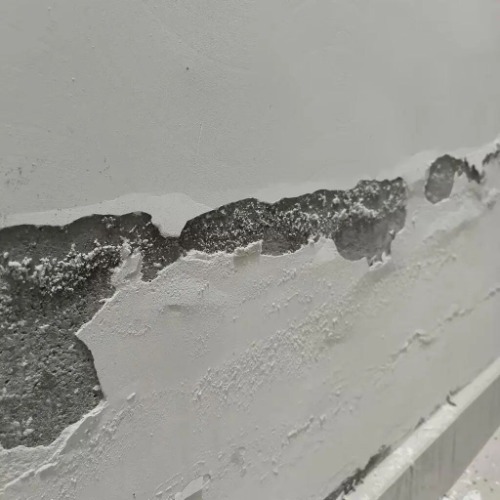
Figure 5: Efflorescence and delamination: salt bloom on a damp substrate after the finish has failed.
From the analysis above, a finish material for external insulation needs at least four characteristics:
First, flexible - it does not crack. It expands and contracts together with the insulation layer, eliminating temperature-induced cracking at the source.
Second, lightweight - it does not pull away. Low self-weight adds no extra load to the insulation layer, which matters especially on high-rise buildings.
Third, waterproof - it does not leak. It forms a complete waterproof barrier; if rainwater cannot get in, freeze-thaw damage never starts.
Fourth, durable - it does not degrade. It stays intact over the long term, without frequent renovation.
Flexible Stone: A Finish System Built for External Insulation
The Justone Flexible Stone wall system was designed around exactly this logic.
Flexible stone's core characteristic is high flexibility: it moves with the substrate. It expands and contracts in step with the insulation layer, so - unlike tile or hard coatings - it does not crack when movement differs.
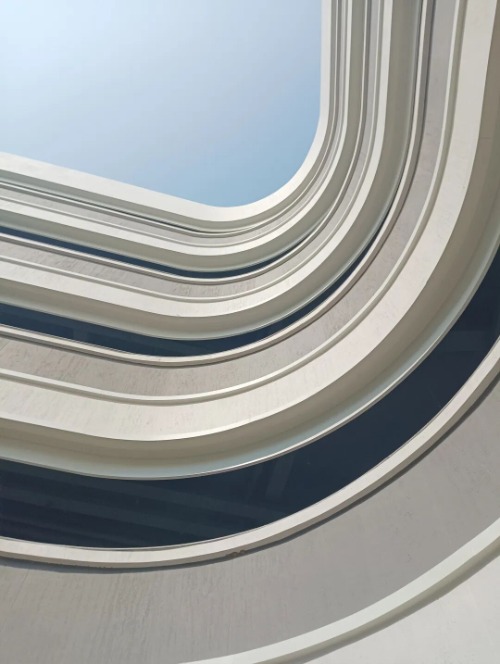
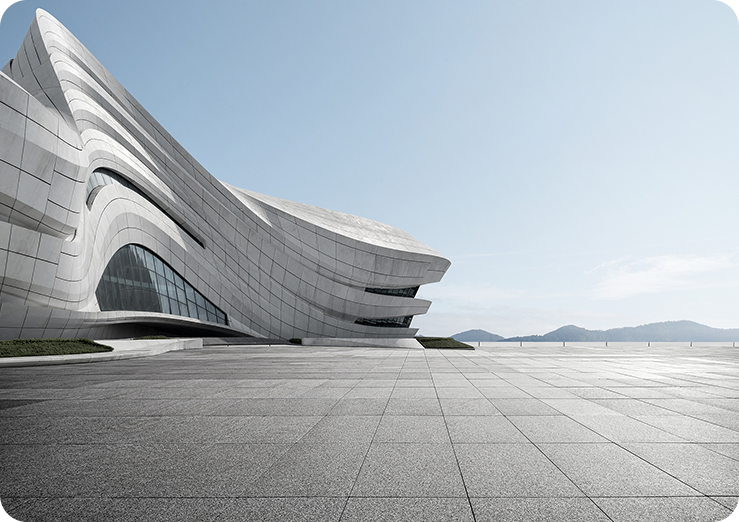
Figure 6: Geometry is not a constraint: a lightweight flexible finish follows curved facades instead of fighting them.
Flexible stone weighs only 2-10 kg/m2, roughly 1/20 the weight of mechanically fixed (dry-hung) stone and 1/10 that of exterior wall tile. Measured pull-off strength on cement-based substrates far exceeds the 600 kPa national standard. Light in weight and strong in bond: the insulation layer no longer has to carry a heavy finish on its back.
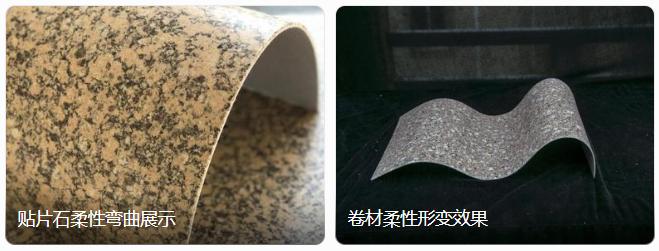
Figure 7: Movement capacity in the material itself - a flexible stone sheet bent around a radius, and roll-grade material flexing.
The special adhesive mortar uses a water-based polymer mortar system rather than ordinary cement bonding. Applied by full-surface trowelling, it cures into a continuous waterproof membrane that seals the microscopic pores of the rendering layer and the joints between sheets, wrapping the outer face of the insulation as one envelope. There are no water-bearing voids at the bond interface. The result is a complete, sealed waterproof cover that stops rainwater and moisture from reaching the insulation.
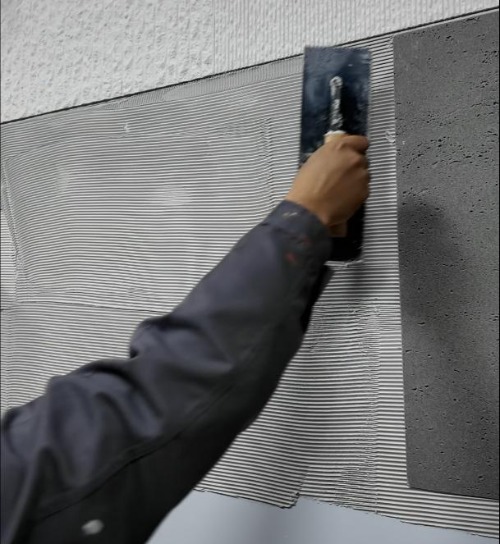
Figure 8: Full-surface bonding: the special adhesive mortar is trowelled out in ribs across the whole face, leaving no voids behind the sheet.
Flexible stone also blocks 99.1% of UV radiation, and withstands 2,000 hours of artificial weathering with chalking grade 0 and colour change of grade 1 or less. Conventional coatings need renovating every three to five years; flexible stone's weather resistance lasts 20 to 30 years. However long the insulation layer lasts, it is there beside it.
When an external insulation system fails early, it is often not the insulation material that is at fault - the wrong finish was specified.
A flexible connection lets stress release. Low weight and a strong bond take the load off the insulation. Waterproofing keeps water out. Long-term weather resistance means no frequent renovation.
A wall that protects its insulation is a wall that takes responsibility.
Send us your wall build-up and climate conditions, and our technical team will come back with a compatible system - including pull-off strength, water absorption, freeze-thaw and artificial weathering test reports for your project file.
Justone Flexible Stone |Hangzhou Justone New Material Co.,Ltd.

Justone is Thin Flexible Stone Veneer Sheet Supplier in China.The company takes innovation-driven development as its core, regards promoting the progress of the industry as its responsibility, deeply engages in the chemical composite building materials track, and demonstrates its professional expertise in this field.



 English
 Français
 Español
 Português
 عربى
عربى