

Content
Across China's cities, exterior wall spalling has become a genuine safety concern. Ceramic tiles and heavy stone slabs — installed with conventional mortar — are under constant stress from thermal expansion, moisture infiltration, and aging adhesive. The industry largely attributes facade failures to two root causes: substandard mortar application and inadequate thermal buffer between the cladding and the substrate. Once a facade starts cracking, rain penetrates, freeze-thaw cycles accelerate the damage, and falling debris becomes a real hazard.
Natural stone offers unmatched prestige but carries serious practical burdens. At roughly 60 kg/m², it demands reinforced structural support, adds cost to the engineering phase, and makes high-rise installation logistically complex. Coatings are lightweight but degrade quickly — fading, chalking, and peeling within three to five years under UV and weather exposure. Ceramic tiles fall somewhere in between, but their rigidity makes them unsuitable for curved surfaces, and their weight still poses a fall risk if adhesion fails.
The gap in the market is clear: architects and developers need a wall cladding material that looks like real stone, performs over decades, stays safely bonded to the facade, and doesn't compromise a building's structural budget. Flexible stone veneer was developed specifically to close that gap.
Flexible stone veneer — known in Chinese construction circles as 贴片石 or flexstone sheet — is an ultra-thin wall cladding panel made from natural quartz sand and stone powder as primary raw materials. Unlike conventional faux-stone coatings, there is no synthetic pigment involved: the color comes entirely from the quartz sand itself, giving each panel genuine mineral tones that don't fade over time.
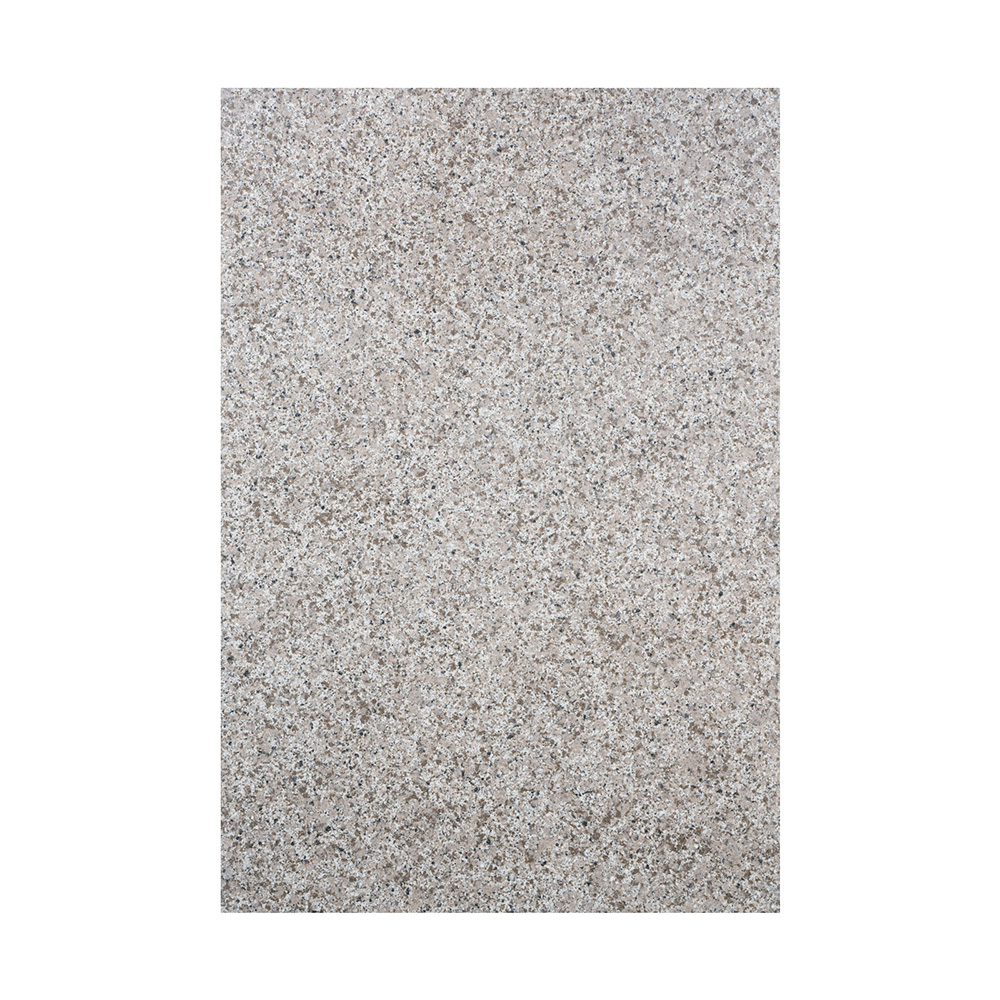
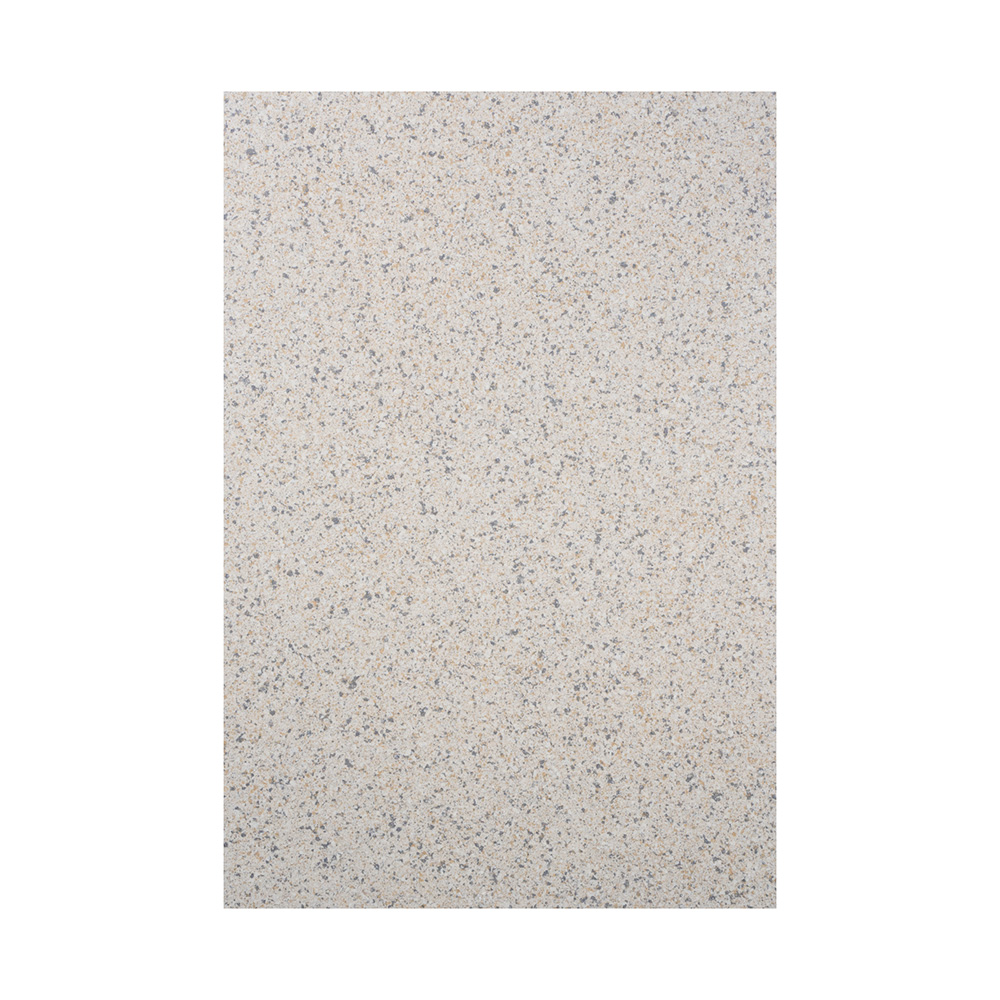
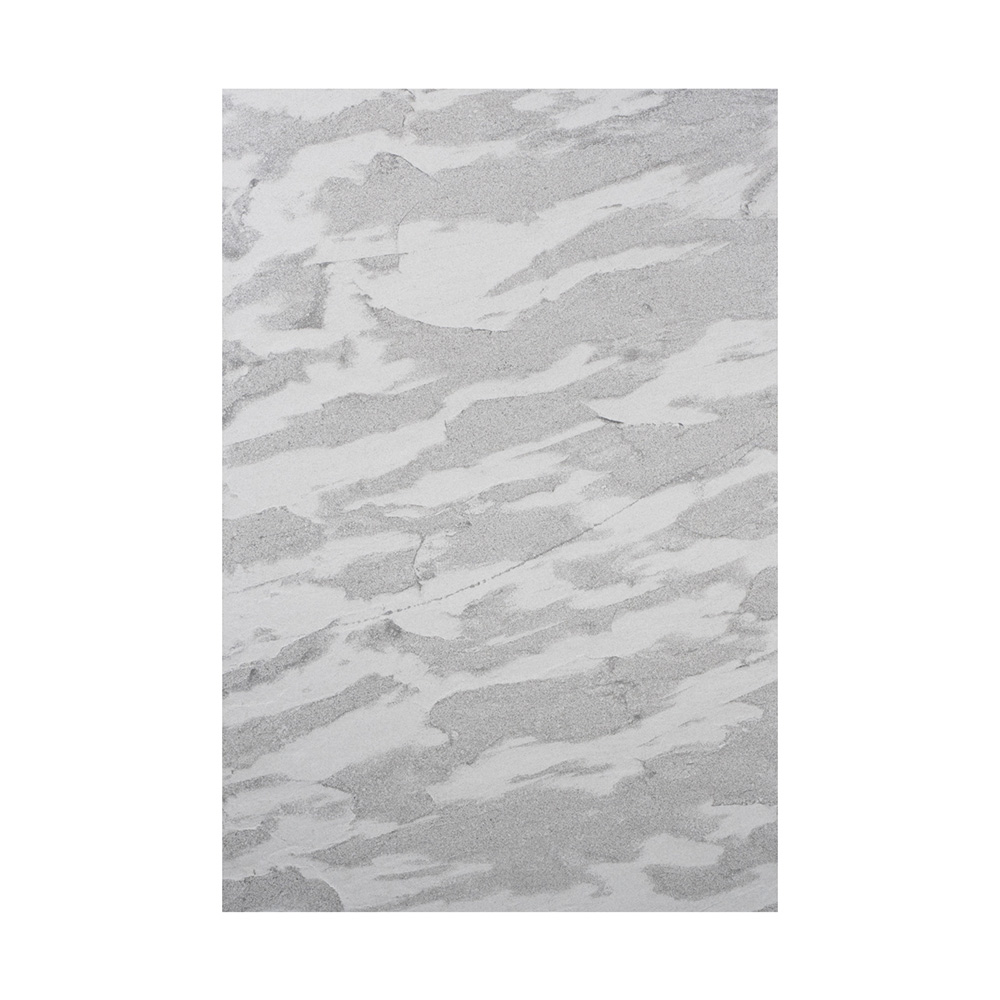
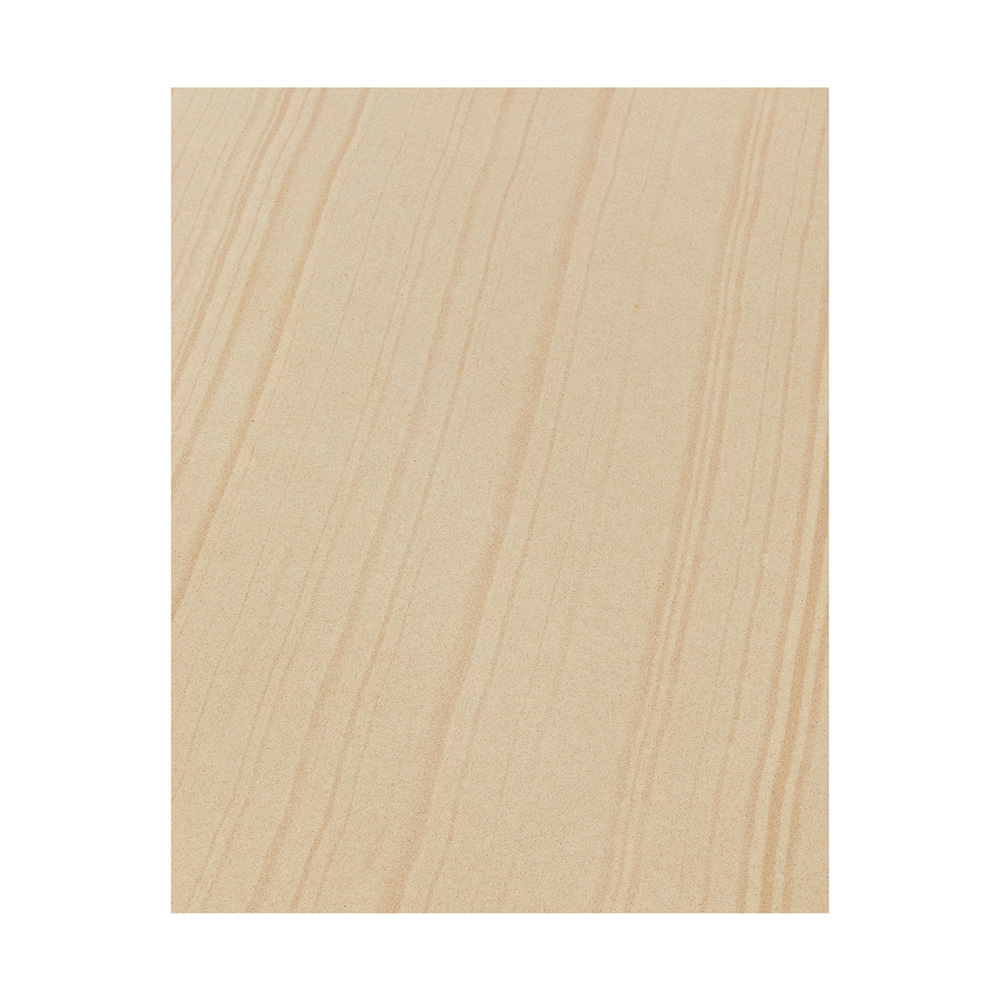
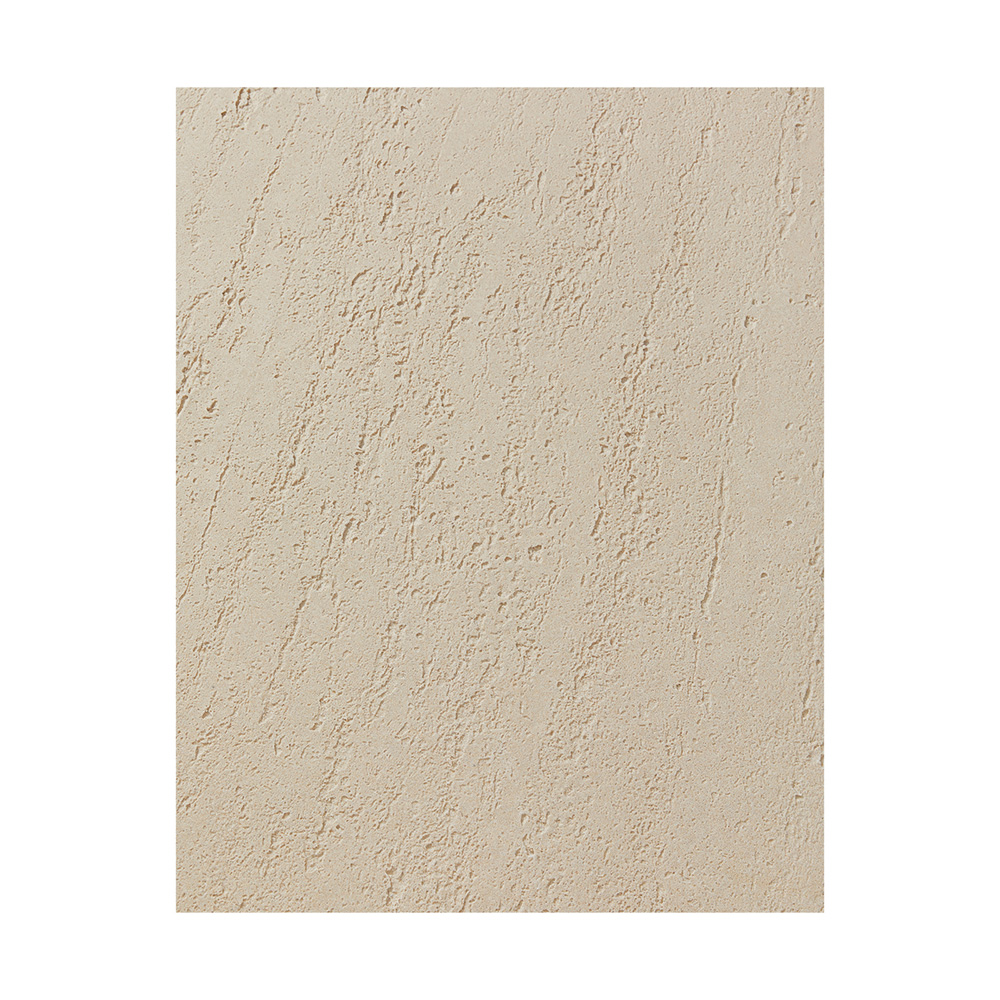
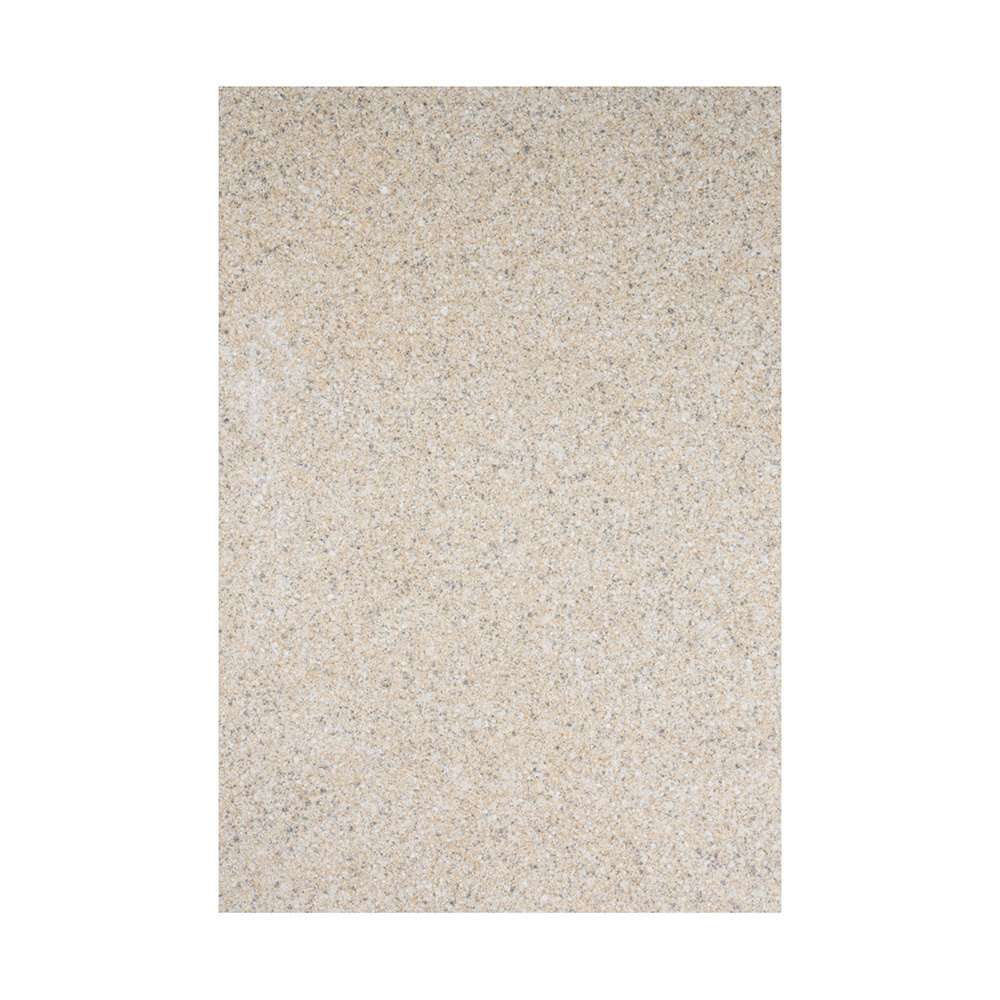
The manufacturing process uses a proprietary 3D spray-cast technique on a continuous production line. The slurry is formed in a single pass, producing a panel with a consistent, natural stone surface texture — whether the target finish is granite, slate, sandstone, travertine, or rammed earth. The finished sheet is backed with a reinforcing mesh, which provides structural integrity while keeping the panel flexible enough to bend, roll, and conform to irregular surfaces.
The result is a product that sits in its own category: it has the visual authenticity of natural stone, the safety profile of a bonded flexible membrane, and installation characteristics closer to wallpaper than masonry. Justone's flexstone sheet covers the full range of architectural stone aesthetics in a single material platform. Explore flexible stone veneer sheets in granite, slate, sandstone, and more to see the complete product range.
Procurement decisions in the cladding industry are won and lost on specifications. Flexible stone veneer's technical profile is what separates it from both heavyweight traditional materials and lightweight but short-lived surface coatings. The table below summarizes the core parameters for Justone Flexstone Sheet:
| Parameter | Justone Flexstone Sheet | Natural Stone | Ceramic Tile | Coating |
|---|---|---|---|---|
| Weight (kg/m²) | 3.5–4 | 60 | 30 | 1–4 |
| Thickness (mm) | 2.7 ± 0.5 | 20–30+ | 8–12 | 0.5–2 |
| Min. Bend Radius | 200 mm | Not bendable | Not bendable | N/A |
| Bond Pull Strength | ≥ 800 KPa | Varies | Varies | Low |
| Weather Resistance | 20+ years | 20+ years | 20+ years | 3–5 years |
| Installation Speed | Fast | Slow | Slow | Medium |
The weight advantage is the most structurally significant figure. At roughly one-fifteenth the weight of dry-hung stone and one-eighth the weight of standard ceramic tile, Justone Flexstone Sheet can be applied to facades where heavier materials are simply not viable — older buildings undergoing renovation, high-rise upper floors, and lightweight steel-frame structures. The 800 KPa pull-off strength, tested to national standards, exceeds the GB requirement of 600 KPa and reflects a bond that is engineered to stay put rather than rely on gravity and luck.
Understanding flexible stone veneer as a category is one thing; choosing Justone's specific formulation requires understanding where its engineering delivers measurable, project-level value.
1. Active wall protection. The combination of flexible adhesive and the panel's dual reinforcement mesh allows the cladding system to absorb substrate movement without cracking at the surface. The panel's thermal conductivity layer — approximately 4–5 mm including adhesive — acts as a buffer, reducing temperature-induced stress on the substrate itself. The system is waterproof by design: it prevents rainwater from reaching the base layer, eliminating the moisture infiltration that drives most long-term facade degradation.
2. Genuine structural safety. Flexstone sheet weighs roughly 1/20 of stone and 1/10 of ceramic tile. The proprietary adhesive achieves a bond strength of 800 KPa — tested to the domestic standard of 600 KPa, with margin. Because the panel is flexible, it absorbs thermal contraction shocks that would cause rigid tile systems to debond and fall. There is no heavy mass to detach, and the adhesive system is engineered to maintain shear resistance over the product's rated 20-year service life.
3. Eco-friendly material composition. The panels use natural quartz sand and stone powder — widely available mineral inputs — without synthetic colorants or volatile compounds. Production generates no airborne dust and no noise on the construction site. Justone's manufacturing process is designed to minimize waste, and the finished panel complies with green building material criteria. See the step-by-step flexible stone installation process for a full breakdown of what an on-site application looks like.
4. Fast, versatile installation. The panels cut with a standard utility knife and bond directly to the substrate — concrete, existing tile, cement render, or brick — without specialist tools or equipment. Installation speed is roughly one-third of traditional stone or tile, which translates directly to reduced labor cost and shorter project schedules. The minimum bending radius of 200 mm means the same panel wraps circular columns, arched entrances, and curved feature walls without fabrication modifications or special cutting.
5. Long-term cost efficiency. Compared to natural stone, the installed cost of Justone Flexstone Sheet can be as low as one-quarter, factoring in material price, reduced structural engineering requirements, and faster labor. Compared to coatings, the durability advantage is decisive: a painted or sprayed surface needs refreshing every three to five years. Flexstone Sheet's rated service life exceeds 20 years with no recoating required — the total cost of ownership across that period is substantially lower for any facade that would otherwise require repeat painting cycles.
Flexible stone veneer's combination of low weight, conformability, and 20-year durability makes it applicable across a wider range of surfaces and project types than any rigid cladding material.
Building exteriors. This is the primary use case. Residential towers, commercial buildings, schools, hospitals, and public facilities all benefit from a facade that reads as natural stone at close range while adding almost no structural load. Justone's granite-finish flexible stone veneer for exterior facades is particularly suited to institutional projects where the aesthetic expectation is formal and the budget is fixed.
Ceiling and soffit applications. The low weight — 3.5–4 kg/m² — is essential here. No conventional stone or tile product can be safely adhered overhead at scale. Flexstone Sheet's bond strength and light mass make it viable for covered walkways, building entrance soffits, and public-space ceilings where a stone aesthetic is specified.
Curved and irregular surfaces. With a minimum bend radius of 200 mm, Justone Flexstone Sheet conforms to cylindrical columns, curved retaining walls, archways, and non-standard facade geometries. The same roll of material goes around a corner without a cut; a column gets wrapped in one continuous piece. This is architecturally significant — curved stone work traditionally requires custom-fabricated pieces at premium cost and lead time.
Elevated structures and public frameworks. Overhead architectural elements — transit canopies, elevated walkway structures, parking deck facades — benefit from materials that are both weather-resistant and light. Flexstone Sheet is rated for outdoor use, resistant to freeze-thaw cycling, and carries a low enough mass that it doesn't require supplementary mechanical fixings in most applications.
Renovation over existing surfaces. One of the most commercially relevant applications is overlay installation. Flexstone Sheet bonds directly to existing ceramic tile, painted concrete, and cement render without removal. For building owners looking to update an aged facade without the cost and disruption of full strip-out, this is a direct solution. Browse completed architectural projects using Justone flexible stone to see how the material performs across different building types and climates.
Not all flexible stone veneer products are equivalent. The category has expanded rapidly, and the quality range is wide. When evaluating options for a specific project, three criteria consistently separate reliable products from short-lived ones.
Material composition. The highest-performing panels use natural quartz sand as the base material — what the industry calls a full-body quartz sand formulation. This matters because the color is intrinsic to the material rather than applied to the surface. A panel that relies on pigmented coating for its stone effect will fade; a panel whose color comes from the mineral content of the quartz itself will not. Justone's flexstone sheet is manufactured from natural quartz sand and stone powder without synthetic colorants — the grain pattern visible on the surface runs through the full thickness of the panel.
Bond strength certification. Ask for the pull-off adhesion test result. The Chinese national standard for flexible stone panel adhesion (JG/T 540-2017) sets a minimum threshold; products from serious manufacturers will have independent lab test reports showing results at or above 800 KPa. Justone holds 9 invention patents and 27 utility patents covering formulation, process, and equipment — the bond performance is a function of a proprietary adhesive system developed in parallel with the panel itself, not a generic site adhesive applied after the fact.
Texture authenticity and range. The utility of flexible stone veneer for a project depends on whether the available textures match the design specification. Justone's product range covers granite, slate, sandstone, travertine, rammed earth, wooden texture, linear stone, brick pattern, axe-carved, and flowing stone aesthetics — each developed from real stone surfaces rather than graphic patterns. For projects with a defined material palette, this range ensures the flexible veneer option is a genuine substitute rather than a compromise.
For technical specifications, sample requests, or project-specific guidance, Justone's team has supported clients across residential, commercial, and public-infrastructure segments since 2013. The factory operates from Hangzhou with production capacity sufficient to serve both domestic and international project volumes.
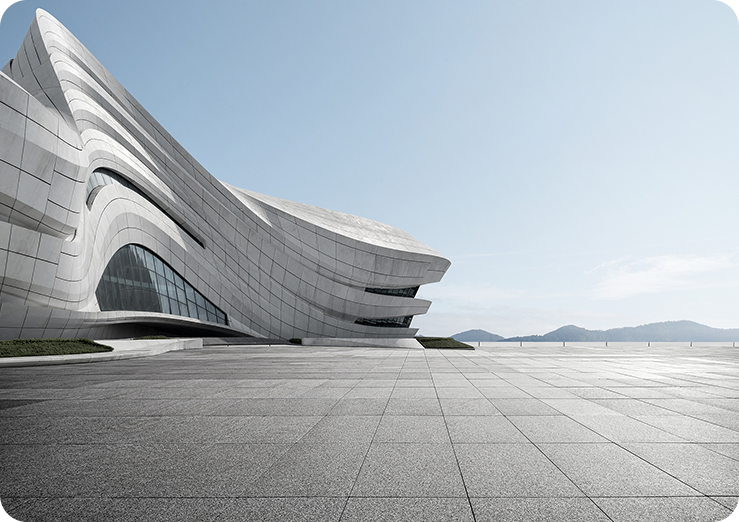

Justone is Thin Flexible Stone Veneer Sheet Supplier in China.The company takes innovation-driven development as its core, regards promoting the progress of the industry as its responsibility, deeply engages in the chemical composite building materials track, and demonstrates its professional expertise in this field.



 English
 Français
 Español
 Português
 عربى
عربى